Grant Initiative for Mango Value Chain Transformation
Supported by Mennonite Economic Development Associates (MEDA)
The Challenge Farmers in the mango value chain face:
- Low productivity due to limited knowledge of Good Agricultural Practices (GAPs).
- Poor pest and disease control and minimal adoption of climate-smart techniques.
- Limited access to affordable credit.
- Weak market linkages and value addition opportunities.
- Gender inequality and environmental vulnerability.
How can we make a difference together?
Ahadi Achievers Empowerment CBO is committed to empowering communities through sustainable development initiatives. We work together with local communities and partners to address social, economic and environmental challenges while creating opportunities for a better future.
Our Solution – Proposed Initiative AAE’s grant-supported program will:
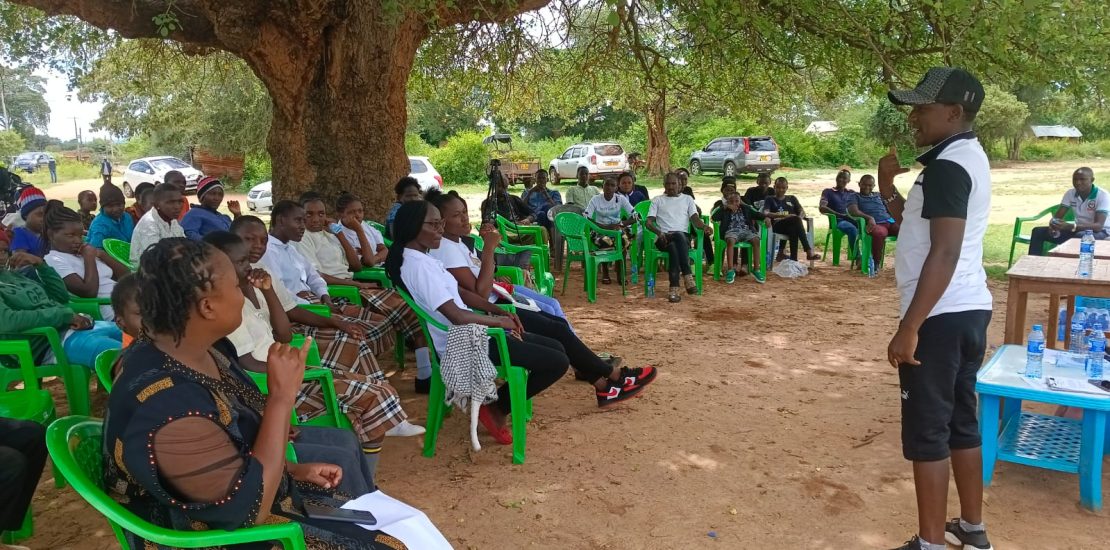
- Train and mentor 30 Community Agriculture Champions (CACs) to lead farmer mobilization and extension.
- Establish 10 demonstration plots showcasing climate-smart practices, water harvesting, and eco-friendly pest management.
- Deliver financial literacy training to 2,000 farmers and link 500 women and youth to tailored loan packages.
- Strengthen mango cooperatives and farmer groups for aggregation and market access.
- Train farmers on post-harvest handling, hygiene, and compliance to reduce losses.
- Host market linkage forums connecting farmers to processors, exporters, and institutional buyers.
- Promote gender-responsive technologies (mango harvesting tools, fruit fly traps) to ease women’s workload.
- Integrate agroforestry on 50% of target farms to enhance resilience and sustainability.
Innovation – CAC System
The Community Agriculture Champion (CACs) model is the core innovation: local champions act as knowledge multipliers, linking farmers to inputs, finance, and markets. Supported by demo plots, VSLAs, contract farming, and value addition hubs, this system is scalable and community-driven.
Expected Impact
- 25–35% yield increase in horticultural crops.
- 20–30% rise in household revenues through better markets and reduced losses.
- Lower production costs via sustainable practices and group input procurement.
- Improved financial inclusion for women and youth.
- Stronger, more reliable supply chains for SMEs and distributors.
- Enhanced environmental sustainability through agroforestry and IPM.